Bullies Mocked a New Cheerleader at School, Never Realizing Her Father Was a Member of the Hells Angels
Part 6
All parts
Choose a chapter- 1Part 1
- 2Part 2
- 3Part 3♙
- 4Part 4
- 5Part 5
- 6Part 6♙
- 7Part 7
- 8Part 8
- 9Part 9♙
- 10Part 10
- 11Part 11
- 12Part 12♙
- 13Part 13
- 14Part 14
- 15Part 15♙
- 16Part 16
- 17Part 17
- 18Part 18♙
- 19Part 19
- 20Part 20
- 21Part 21♙
- 22Part 22
- 23Part 23
- 24Part 24♙
- 25Part 25
- 26Part 26
- 27Part 27♙
- 28Part 28
- 29Part 29
- 30Part 30♙
- 31Part 31
- 32Part 32
- 33Part 33♙
- 34Part 34
- 35Part 35
- 36Part 36♙
- 37Part 37
- 38Part 38
- 39Part 39♙
- 40Part 40
- 41Part 41
- 42Part 42♙
- 43Part 43
- 44Part 44
- 45Part 45♙
- 46Part 46
- 47Part 47
Part 6 / 47
A framed photograph of Callie at the Grand Canyon, her hair blown sideways by the wind, laughing with her whole face, the way she laughed when she forgot she was being looked at. He thought about the three-year lease signed on the Larkin Street garage. He thought about being 59 years old and tired in ways that sleep no longer fixed. “Unpacked the boxes,” he said. Ren looked at him for a long moment.
Something settled in her expression. “Okay,” she said, and went back to her pancakes. The most important conversation they would have that morning. Neither of them made a production of it. The garage sat on Larkin Street, two blocks east of Maine.
It had been empty for 3 years, left behind by a man named Harlon Boyd, who’d run it for over two decades before his knees sent him to Florida. The building had what Boon thought of as good bones 60s construction that didn’t care about being pretty, but cared deeply about not falling down. The sign over the bay door, said Ashford Auto. Boon had put it up himself on his first visit to town three weeks earlier. Just the name, no tagline, no phone number, no promise of honest work and fair prices the way so many shops advertised.
He figured if the work was honest and the prices were fair, people would say so on their own. If they didn’t, no sign was going to fix that. The first two days he spent getting the space organized. The arrangement of tools, the way the afternoon light came through the bay doors and hit the concrete floor at an angle that was actually useful rather than blinding. The placement of the hydraulic lift, the small refrigerator in the corner that would hold water in summer and on certain evenings two cold beers.
He set the radio to a country station that played older material. Cash Haggard Whan Jennings music that had lived a life before you heard it. He didn’t think about Louisville. He didn’t think about the years before Louisville. He just worked.
And work had always been the place where he felt most like himself, which was probably why he’d spent so much of his life in garages. Ren came by after school on the second day. She sat on a stool near the door doing homework, occasionally passing him a wrench without being asked. She’d grown up in garages. She spoke their language without having to think about it.
More Stories
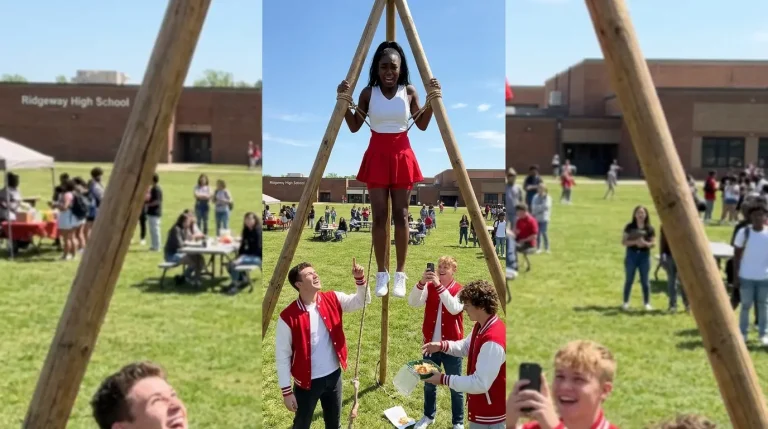 NEW The Bullies Refused to Listen as He Begged Them to Stop at the Picnic, But What They Did Next Left the Whole School Furious
The Bullies Refused to Listen as He Begged Them to Stop at the Picnic, But What They Did Next Left the Whole School Furious
 NEW A Cocky Champion Mocked a Quiet Woman in Front of 800 Fans, Never Expecting One Move to Change Everything
A Cocky Champion Mocked a Quiet Woman in Front of 800 Fans, Never Expecting One Move to Change Everything
 NEW In Front of 600 Fans, an Arrogant Black Belt Underestimated a Quiet Black Woman, Never Expecting His Confidence to Crumble
In Front of 600 Fans, an Arrogant Black Belt Underestimated a Quiet Black Woman, Never Expecting His Confidence to Crumble
 NEW A Confident Fighter Challenged a Farmer to Last Three Minutes for $500, But He Was Stunned When the Farmer Accepted
A Confident Fighter Challenged a Farmer to Last Three Minutes for $500, But He Was Stunned When the Farmer Accepted
 NEW An Arrogant Fighter Offered a Farmer $500 to Last Three Minutes, Never Expecting Him to Accept the Challenge
An Arrogant Fighter Offered a Farmer $500 to Last Three Minutes, Never Expecting Him to Accept the Challenge
 NEW He Thought No Farmer Would Dare Accept His $500 Challenge, Until the Man Agreed to Last Three Minutes
He Thought No Farmer Would Dare Accept His $500 Challenge, Until the Man Agreed to Last Three Minutes
NEW The Quiet Black Woman Was Underestimated by a Cocky Black Belt, But His Smug Grin Disappeared in Front of 600 Fans
The Quiet Black Woman Was Underestimated by a Cocky Black Belt, But His Smug Grin Disappeared in Front of 600 Fans
 NEW He Thought Humiliating a Quiet Black Woman Would Be Easy, Until the Arrogant Black Belt Lost His Smile Before 600 Fans
He Thought Humiliating a Quiet Black Woman Would Be Easy, Until the Arrogant Black Belt Lost His Smile Before 600 Fans