Confident He Could Humiliate a Black Janitor, the Boxer Challenged Him to Dodge Just One Punch, Never Imagining His Opponent’s Championship Past
Part 36
All parts
Choose a chapter- 1Part 1
- 2Part 2
- 3Part 3♙
- 4Part 4
- 5Part 5
- 6Part 6♙
- 7Part 7
- 8Part 8
- 9Part 9♙
- 10Part 10
- 11Part 11
- 12Part 12♙
- 13Part 13
- 14Part 14
- 15Part 15♙
- 16Part 16
- 17Part 17
- 18Part 18♙
- 19Part 19
- 20Part 20
- 21Part 21♙
- 22Part 22
- 23Part 23
- 24Part 24♙
- 25Part 25
- 26Part 26
- 27Part 27♙
- 28Part 28
- 29Part 29
- 30Part 30♙
- 31Part 31
- 32Part 32
- 33Part 33♙
- 34Part 34
- 35Part 35
- 36Part 36♙
- 37Part 37
- 38Part 38
- 39Part 39♙
- 40Part 40
- 41Part 41
- 42Part 42♙
- 43Part 43
- 44Part 44
- 45Part 45♙
- 46Part 46
- 47Part 47
- 48Part 48♙
- 49Part 49
Part 36 / 49
“I was asked to demonstrate a famous move today,” he began. “I’m not going to. You’ve all seen the video, and I don’t think anyone needs another version of it.”
A few people laughed gently.
“Boxing gave me a lot,” he continued. “It gave me discipline, friends, work, and a way to understand fear. It also took things from me. My hands still hurt. I missed family dinners. I learned too late that some victories cost more than they pay. This gym can teach children something better than the idea that being strong means making other people afraid.”
He looked at the students lined along the wall.
“When I was a boy, Samuel Bell taught me to sweep the floor before I learned to throw a punch. I thought he was wasting my time. It took me years to understand that he wanted me to know the ring belonged to everyone who helped take care of it. That’s the gym I’m asking you to support.”
He stepped back. There was a moment of silence, then applause. Martin bowed his head slightly and returned to his chair.
By the end of the event the volunteers had raised a little more than half the needed amount. It was a substantial start but not a miracle. Frank would still have to negotiate payment terms and find additional support. Sarah suggested grant applications and a sustainable scholarship fund. Eddie offered to help write letters to former members.
As the visitors left, Tyler carried folding chairs toward the storage room with Danny and Jake. Nobody asked for a photograph of him doing it. He did not look toward the cameras.
Martin watched from the doorway and thought of the promise Tyler had made before the punch. The young man had knelt in public that evening. It had taken considerably more work for him to stand differently afterward.
CHAPTER 42 — THE CHECK THAT DID NOT COME
Two weeks after the fundraiser, Frank received a message from the roof contractor. The repair cost would be higher than expected because hidden water damage had weakened part of the support structure. The building would remain partly closed until repairs were completed and inspected.
Frank read the estimate twice. The fundraiser money, the small donations, and the equipment sales were not enough. He had negotiated a payment plan with the landlord, but there were limits to how far goodwill could stretch. Champions Den might have to reduce classes or relocate temporarily.
He called Sarah and Martin into the office.
“I’m not asking either of you to save me,” he said. “I need to decide whether this place can continue responsibly.”
Sarah studied the numbers. “We can reduce the evening schedule and run the youth classes at the school for a few weeks. The principal said the space might be available.”
“That’s temporary,” Frank said.
“Then we use the time to make a long-term plan.”
Martin looked at the estimate. He remembered the day the Cushing Street gym closed and the helpless anger he’d felt toward every system that had made safety so expensive. He was tempted to tell Frank to keep fighting, to promise that the community would somehow find the money. Instead he took a breath.
“First we make sure nobody loses pay without warning,” he said. “Then we decide what services we can provide safely. If the building closes, the people who work here deserve to know what’s happening.”
Frank nodded. He had expected Martin to speak about legacy. The older man spoke about wages and schedules.
They worked through a practical plan. The staff would be paid for scheduled hours already committed. They would shift some classes to approved community spaces and suspend those that required unavailable equipment. Parents could receive refunds or transfer their fees. The gym would publish regular financial updates, not to attract sympathy but to let supporters see what their money was doing.
A local credit union offered to review a small business loan application. The neighborhood association agreed to help seek grants for the youth program. None of the options guaranteed success. They did, however, give the gym choices that did not depend on exploiting a controversial video.
Later that week Miles Crane called again. He offered a contract larger than the first, this time framed as a reconciliation campaign featuring Martin and Tyler in a staged exhibition. The video, he said, could be marketed as the greatest comeback story in local sports history.
Frank listened carefully. Then he thanked Miles for the offer and declined.
“Are you sure?” Miles asked. “You need this.”
More Stories
 NEW The Bullies Refused to Listen as He Begged Them to Stop at the Picnic, But What They Did Next Left the Whole School Furious
The Bullies Refused to Listen as He Begged Them to Stop at the Picnic, But What They Did Next Left the Whole School Furious
 NEW A Cocky Champion Mocked a Quiet Woman in Front of 800 Fans, Never Expecting One Move to Change Everything
A Cocky Champion Mocked a Quiet Woman in Front of 800 Fans, Never Expecting One Move to Change Everything
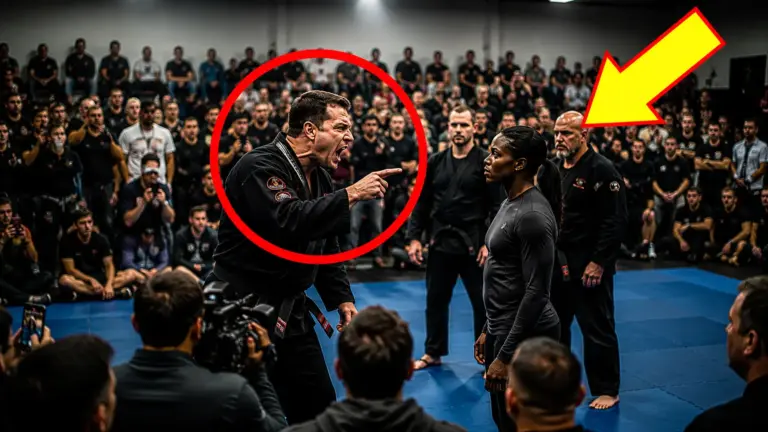 NEW In Front of 600 Fans, an Arrogant Black Belt Underestimated a Quiet Black Woman, Never Expecting His Confidence to Crumble
In Front of 600 Fans, an Arrogant Black Belt Underestimated a Quiet Black Woman, Never Expecting His Confidence to Crumble
 NEW A Confident Fighter Challenged a Farmer to Last Three Minutes for $500, But He Was Stunned When the Farmer Accepted
A Confident Fighter Challenged a Farmer to Last Three Minutes for $500, But He Was Stunned When the Farmer Accepted
 NEW An Arrogant Fighter Offered a Farmer $500 to Last Three Minutes, Never Expecting Him to Accept the Challenge
An Arrogant Fighter Offered a Farmer $500 to Last Three Minutes, Never Expecting Him to Accept the Challenge
 NEW He Thought No Farmer Would Dare Accept His $500 Challenge, Until the Man Agreed to Last Three Minutes
He Thought No Farmer Would Dare Accept His $500 Challenge, Until the Man Agreed to Last Three Minutes
NEW The Quiet Black Woman Was Underestimated by a Cocky Black Belt, But His Smug Grin Disappeared in Front of 600 Fans
The Quiet Black Woman Was Underestimated by a Cocky Black Belt, But His Smug Grin Disappeared in Front of 600 Fans
 NEW He Thought Humiliating a Quiet Black Woman Would Be Easy, Until the Arrogant Black Belt Lost His Smile Before 600 Fans
He Thought Humiliating a Quiet Black Woman Would Be Easy, Until the Arrogant Black Belt Lost His Smile Before 600 Fans