One Punch Was All the Cocky Boxer Wanted the Black Janitor to Dodge, But He Had No Idea the Man Was Once a Boxing Champion
Part 35
All parts
Choose a chapter- 1Part 1
- 2Part 2
- 3Part 3♙
- 4Part 4
- 5Part 5
- 6Part 6♙
- 7Part 7
- 8Part 8
- 9Part 9♙
- 10Part 10
- 11Part 11
- 12Part 12♙
- 13Part 13
- 14Part 14
- 15Part 15♙
- 16Part 16
- 17Part 17
- 18Part 18♙
- 19Part 19
- 20Part 20
- 21Part 21♙
- 22Part 22
- 23Part 23
- 24Part 24♙
- 25Part 25
- 26Part 26
- 27Part 27♙
- 28Part 28
- 29Part 29
- 30Part 30♙
- 31Part 31
- 32Part 32
- 33Part 33♙
- 34Part 34
- 35Part 35
- 36Part 36♙
- 37Part 37
- 38Part 38
- 39Part 39♙
- 40Part 40
- 41Part 41
- 42Part 42♙
- 43Part 43
- 44Part 44
- 45Part 45♙
- 46Part 46
- 47Part 47
- 48Part 48♙
- 49Part 49
Part 35 / 49
Frank listened. It was an ordinary piece of advice, but six months earlier he might have ignored it to save an event. Now he followed it without argument.
By morning the inspector had closed the eastern section pending repairs. The fundraiser, planned for Saturday, had nowhere to go. Parents called to ask whether their children would lose classes. Frank sat beside the phone, staring at a pile of receipts and thinking of the program he had already promised not to abandon.
Sarah arrived with an idea. The local middle school had a gymnasium available on Saturday afternoons. The principal had trained at Cushing Street when he was young and remembered Martin. He agreed to let them use the space if the event was limited to approved, non-contact demonstrations and if volunteers handled setup and cleanup.
The change required new plans, new signs, and phone calls to everyone who had purchased tickets. Jake and Danny helped move safe, portable equipment out of the undamaged storage area under staff supervision. Tasha organized the cleaning supplies needed at the school. Eddie inspected the borrowed mats. Martin checked the schedule and made sure enough chairs would be available for older visitors.
Tyler heard about the emergency from Amanda and offered to help. Frank gave him a list of ordinary tasks, mostly carrying boxes and directing visitors. There would be no promotional appearance and no special place for him on the program. Tyler agreed.
By Friday evening, the school gym was ready. Folding chairs lined the far wall. The demonstration mats were clean and secure. Handwritten signs directed visitors from the parking lot. A table near the entrance displayed the repair estimate and the amount the gym still needed to raise.
Martin stood in the doorway with Sarah, watching the volunteers finish.
“You ever think we’d be doing this?” she asked.
“Moving a gym in a day? No.”
“Keeping it alive without turning anybody into a spectacle?”
Martin looked at the rows of chairs. “That’s the part I hoped we’d figure out.”
He was tired. His knee ached. He had spent the evening checking small details instead of throwing punches or telling stories. Yet the room was full of people working together without asking who among them was most important.
For the first time in months, Champions Den felt less like a business trying to survive by taking advantage of its weakest people and more like a community trying to decide what it was worth saving.
CHAPTER 41 — A SHOW WITHOUT A FIGHT
The fundraiser began at two in the afternoon. Parents brought homemade cookies and coffee. A local restaurant donated sandwiches. The school principal arranged for students to help guide visitors from the parking lot. A barber who had once trained under Martin offered free haircuts at his shop the following week to anyone who supported the youth program.
There were no spotlights and no entrance music. The gymnasium smelled of floor polish and baked goods. People sat in folding chairs, talking quietly while children moved through warm-up drills under Sarah’s supervision.
Frank opened the event with a short statement about the roof damage and the gym’s financial needs. He explained how much money had to be raised and how donations would be used. He thanked the volunteers, then acknowledged the failures that had brought the gym under scrutiny.
“We’ve been given a chance to run this place better,” he said. “We don’t expect people to trust a speech. We expect them to watch what we do next.”
The first demonstration showed basic footwork. Maya and another student moved through a pattern while Sarah explained why control mattered more than speed. Danny demonstrated how to stop immediately when a coach gave the signal. Eddie showed how proper wraps protected hands. Children who made mistakes were corrected without being shamed.
Then several former students spoke. The school principal remembered Martin teaching him to arrive on time and to finish his homework before training. A retired bus driver told the audience about the year the gym had helped keep his son out of trouble. A woman who now worked as a social worker said that boxing had taught her how to ask for help without feeling weak.
Martin sat near the back, embarrassed by the attention but moved by the stories. He had taught so many children that he’d forgotten many of the details they remembered. Hearing them speak reminded him that a coach’s influence often continues long after the coach stops watching.
When his turn came, he walked to the front without a microphone. The room was quiet enough to hear him.
More Stories
 NEW The Bullies Refused to Listen as He Begged Them to Stop at the Picnic, But What They Did Next Left the Whole School Furious
The Bullies Refused to Listen as He Begged Them to Stop at the Picnic, But What They Did Next Left the Whole School Furious
 NEW A Cocky Champion Mocked a Quiet Woman in Front of 800 Fans, Never Expecting One Move to Change Everything
A Cocky Champion Mocked a Quiet Woman in Front of 800 Fans, Never Expecting One Move to Change Everything
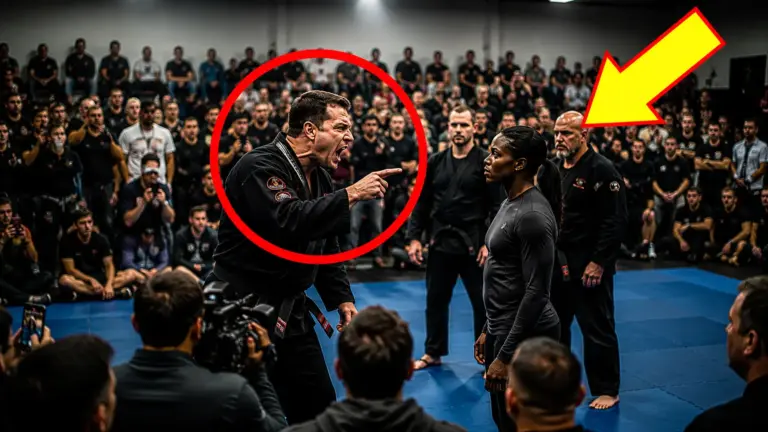 NEW In Front of 600 Fans, an Arrogant Black Belt Underestimated a Quiet Black Woman, Never Expecting His Confidence to Crumble
In Front of 600 Fans, an Arrogant Black Belt Underestimated a Quiet Black Woman, Never Expecting His Confidence to Crumble
 NEW A Confident Fighter Challenged a Farmer to Last Three Minutes for $500, But He Was Stunned When the Farmer Accepted
A Confident Fighter Challenged a Farmer to Last Three Minutes for $500, But He Was Stunned When the Farmer Accepted
 NEW An Arrogant Fighter Offered a Farmer $500 to Last Three Minutes, Never Expecting Him to Accept the Challenge
An Arrogant Fighter Offered a Farmer $500 to Last Three Minutes, Never Expecting Him to Accept the Challenge
 NEW He Thought No Farmer Would Dare Accept His $500 Challenge, Until the Man Agreed to Last Three Minutes
He Thought No Farmer Would Dare Accept His $500 Challenge, Until the Man Agreed to Last Three Minutes
NEW The Quiet Black Woman Was Underestimated by a Cocky Black Belt, But His Smug Grin Disappeared in Front of 600 Fans
The Quiet Black Woman Was Underestimated by a Cocky Black Belt, But His Smug Grin Disappeared in Front of 600 Fans
 NEW He Thought Humiliating a Quiet Black Woman Would Be Easy, Until the Arrogant Black Belt Lost His Smile Before 600 Fans
He Thought Humiliating a Quiet Black Woman Would Be Easy, Until the Arrogant Black Belt Lost His Smile Before 600 Fans